
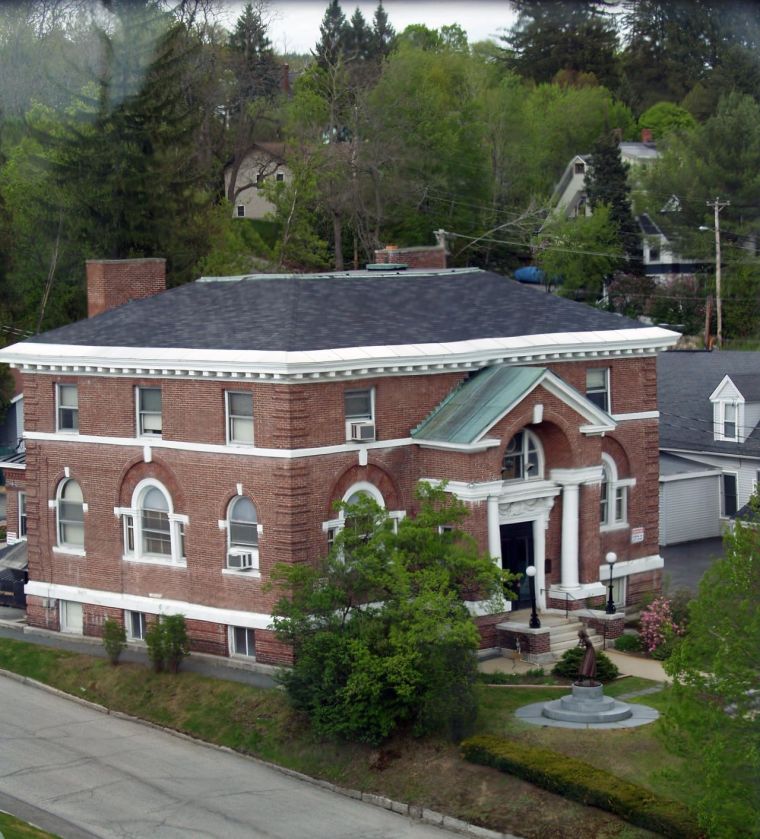
I’ve always loved libraries—especially those housed in old, historic buildings—and the one in Littleton is no exception. Now more than 113 years old, the library is a handsome blend of Neo-Classical and Georgian architectural styles, and it came into being with a little help from Andrew Carnegie. At the turn of the 20th century, Andrew Carnegie funded the construction of more than 2,500 libraries worldwide, believing that free access to books and knowledge was essential for self-improvement and opportunity. His library grants helped countless towns—especially small and rural communities—establish permanent public libraries, many of which still serve their communities today as enduring symbols of education, civic pride, and philanthropy.
For several years, Littleton had been working toward securing a permanent home for its library. That goal finally became achievable in 1902, when the town received the grant from the Carnegie Foundation. As was typical of Carnegie-funded libraries, a few conditions were attached: the town had to commit $1,500 annually for operating expenses and purchase a suitable parcel of land on which to build. Once those requirements were met, the foundation provided $15,000 to turn the dream into reality. The library officially opened its doors in 1906.
Pollyanna Statue in Littleton, New Hampshire
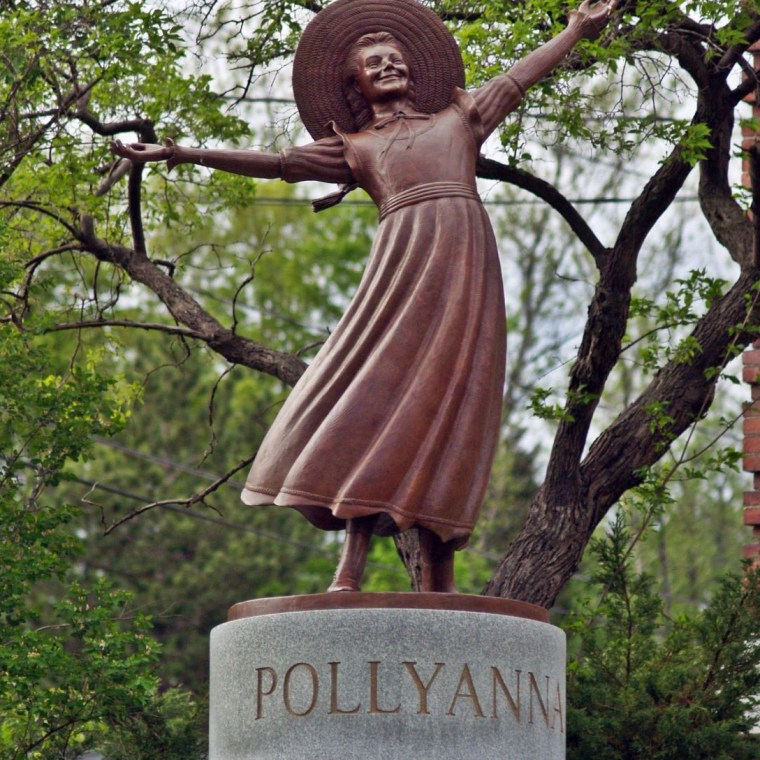 In 2003, the library unveiled a statue of the beloved literary character Pollyanna on its front lawn. Created by artist Emile Birch, the statue captures Pollyanna mid-motion—what looks like a joyful dance—with a broad smile on her face and her arms flung wide open. She radiates optimism and happiness, which feels entirely fitting.
At first glance, Pollyanna dancing on the lawn of a library makes perfect sense—she’s a literary character, after all. But the connection runs deeper. Eleanor H. Porter, who wrote Pollyanna (published in 1913), was born in Littleton in 1868 and lived there until her marriage to John Porter in 1892, when the couple moved to Massachusetts. In fact, her childhood home was located not far from where the library now stands.
To this day, Littleton proudly celebrates this literary connection every June with the Pollyanna “Glad Day” Festival, a popular event that brings the town together in the spirit of optimism, community, and—true to Pollyanna’s philosophy—finding something glad in every situation. Pretty cool, huh?
If you visit the statue, be sure to rub the tip of her boot for a little extra good luck. 🙂
I Love Libraries
I’ve always thought libraries were pretty special places. When I was in school—especially elementary school—I spent as much time in the library as I could. I loved being surrounded by books; there was just something about the atmosphere that felt comforting, curious, and full of possibility.
A Library is More Than Just a Collection of Books
A library is so much more than a building filled with books. Depending on the location, it can offer a wide range of resources for nearly every member of the community: free internet and computer access, books, CDs, DVDs, even cassette tapes. Many libraries host social and educational activities, such as author talks, book discussion groups, classes, and story times for kids. Some sell used books at very low prices, with the proceeds going right back into supporting the library. Others provide free or low-cost access to subscription databases and journals that would otherwise be quite expensive. And now, many libraries have gone digital, allowing patrons to borrow eBooks—how cool is that?
So why not stop by your local library and see what it has to offer? You just might be pleasantly surprised.
 Planet Graple